Trump's tariff confrontation exposes Germany's vulnerabilities
In recent years, Germany's economic landscape has been facing numerous challenges that threaten its global competitiveness. The German economy, traditionally managed with a lack of passion, is often hampered by excessive regulation, record-high taxes, and energy prices, stifling entrepreneurship [1].
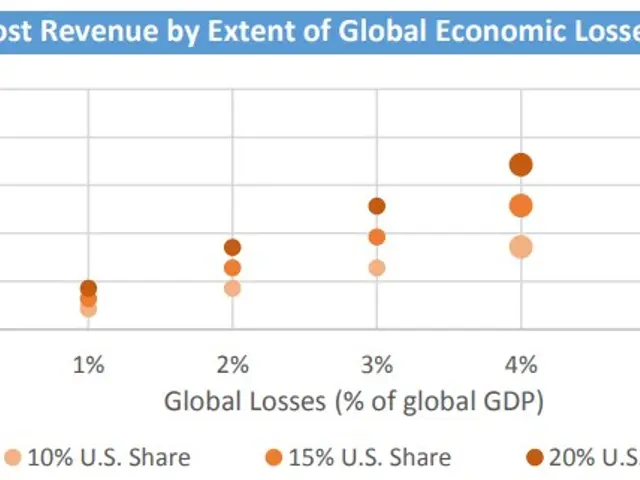
One of the most pressing issues is the trade and tariff uncertainties caused by U.S. policies. Since April 2025, the U.S. has imposed tariffs of at least 10%, and later doubled to 50%, on imports of steel and aluminum products from Germany. This has led to significant uncertainty and potential for economic losses, with forecasts indicating up to a 1.5 percentage point reduction in GDP growth if tensions escalate and retaliatory tariffs follow [2].
The tariff conflict has caused significant challenges for industries in the southwest, leading to a contraction in exports, notably a 7.7% month-on-month drop to the U.S. in May 2025, and an overall 1.4% export decline from the previous month, weakening Germany’s foreign trade [3][4].
The economic growth in Germany is also stagnating due to these trade headwinds, despite government fiscal stimulus. The Bundesbank’s 2025 forecast expects the German economy to stagnate, with increased government spending on defense, infrastructure, and other sectors designed to offset tariff-induced downturns [2].
German manufacturers, particularly in engineering, are also vulnerable to disruptions caused by global supply chain issues, which exacerbate the impact of trade disputes and tariff hikes on exports and industrial production [4].
To mitigate risks from U.S. market exposure, Germany’s engineering sector is intensifying diversification efforts toward Southeast Asia and the Indo-Pacific. Major firms like Bosch, BMW, and Volkswagen are expanding operations and partnerships in Asia to sustain growth amid trade tensions influencing traditional markets [4].
Recognizing these challenges, 61 major German companies have launched the “Made for Germany” initiative in 2025 to foster dialogue with government and support reforms in digitization, innovation, infrastructure, sustainability, and skilled labor development. This initiative aligns with the government's reform and investment programs aimed at improving Germany's investment climate and economic competitiveness [1].
Despite these efforts, Germany's innovative power is waning, and its productivity advantage is melting away. Every second company in a survey by the Baden-Württemberg Chamber of Industry and Commerce expects a decline in exports to the USA in the next 12 months [5]. One in ten industrial companies is already planning to relocate parts of its production to existing US locations in response to the US tariffs [5].
In conclusion, Germany’s global market competitiveness is challenged by international trade barriers, geopolitical risks, economic stagnation, and supply chain vulnerabilities, prompting strategic corporate-government cooperation and market diversification to sustain future growth [1][2][3][4].
References: 1. Made for Germany 2. Bundesbank Economic Outlook 3. Destatis – Exports 4. VDMA – Global Supply Chain Risks 5. Baden-Württemberg Chamber of Industry and Commerce – Survey Results
- The escalating trade tensions between Germany and the U.S., particularly in the finance sector due to tariffs on steel and aluminum imports, are causing significant general-news headaches for the industry, leading to potential economic losses and a contraction in exports.
- Amidst the challenges faced by Germany's economy, the political landscape is witnessing increased dialogue between major corporations (such as Bosch, BMW, and Volkswagen) and the government, focusing on digitization, innovation, infrastructure, sustainability, and skilled labor development in an effort to offset tariff-induced declines and improve competitiveness in the global finance market.