Energy transition and climate objectives may encounter challenges due to the potential prioritization of gas over other renewable sources.
Germany's Economic Minister, Katarina Reiche (CDU), has announced plans to prioritise gas-fired power plants, sparking concerns within the energy sector. Reiche proposes to auction 5 to 10 gigawatts of new gas capacity within 2025, and suggests that operators of renewable energy plants should contribute to grid expansion costs.
Slowing Renewable Growth
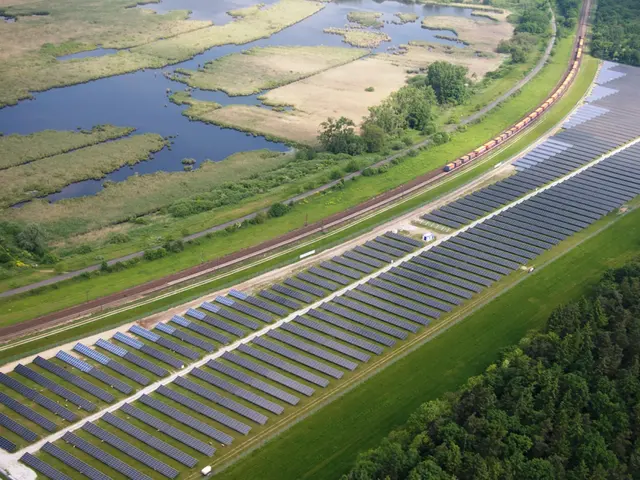
Reiche's plans suggest a policy shift that could potentially slow down the rapid expansion of renewables, a lead that Germany previously held globally. This could jeopardise Germany’s leadership in the global energy transition and undermine climate goals by increasing reliance on fossil gas, a fossil fuel that contributes to greenhouse gas emissions, albeit less than coal or oil ([3], Photon.info).
Financial Burden on Renewables
Requiring green power producers to contribute to grid expansion costs could shift costs that were previously borne by the state or spread broadly. This could reduce the economic attractiveness of investing in renewables, slowing new projects or innovations in the sector, and potentially increasing costs for consumers or deterring new entrants ([4], Photon.info).
Regulatory and Market Risks
Auctioning new gas capacity attracts regulatory scrutiny at the EU level, raising concerns about compliance with climate and energy market rules. The emphasis on gas plants risks locking in infrastructure incompatible with net-zero targets, possibly creating stranded assets in the future ([1], American-German Institute).
Energy Transition Uncertainty
These policies may create uncertainty for investors, energy producers, and consumers, as the government balances gas use with the ongoing clean energy transition. This shift may slow progress on decarbonization and increase Germany’s vulnerability to fossil fuel market volatility.
Other Sector Transformations at Risk
Karin Pittel, an energy expert at the Ifo Institute, has expressed concerns about the potential delay of the transformation of other sectors if care is not taken to ensure that the transformation of the energy sector does not delay the transformation of other sectors.
The concerns raised by experts such as Andreae and Pittel highlight the potential risks associated with the proposed shift in energy policy. The implications, including slowing renewable growth, financial burden on renewables, regulatory and market risks, and energy transition uncertainty, could potentially undermine Germany’s renewable energy ambitions, climate commitments, and long-term energy policy coherence.
- The potential slowing down of renewables' expansion, triggered by Germany's Economic Minister's policy shift, could potentially threaten Germany’s leadership in the global energy transition and hinder climate goals.
- Requiring companies involved in renewable energy production to contribute to grid expansion costs might shift financial burdens from the state or consumers to these companies, potentially decreasing the attractiveness of renewable energy investment.
- Auctioning new gas capacity could invite scrutiny from EU level regulators over compliance with climate and energy market rules, risking incompatibility with net-zero targets and the possibility of future stranded assets.
- The administrative unpredictability stemming from the proposed energy policy shift might create uncertainties for investors, energy producers, and consumers, potentially slowing down progress on decarbonization and increasing Germany’s vulnerability to fossil fuel market instability.
- Delaying the transformation of the energy sector could impact the timeline for transforming other sectors, as emphasized by energy expert Karin Pittel, potentially jeopardizing Germany’s renewable energy ambitions, climate commitments, and long-term energy policy coherence.