Western Nations Engulfed in Self-Destructive Tendencies
In a worrying development, Western countries, including the US, EU, and Germany, are facing economic decline due to excessive consumption and a lack of production, according to recent analyses. This trend, which has been ongoing for several generations, is causing significant problems for these nations, eroding their productivity, innovation, and competitiveness.
In the EU, productivity and innovation are suffering due to longstanding policy failures and austerity measures that have reduced investment, constrained potential output, and curtailed productivity growth, particularly in Southern Europe. Germany's strict fiscal discipline, known as the "black zero" policy, has similarly limited domestic demand, infrastructure investment, and support for disruptive innovation, relying instead on legacy export markets and established industries. This conservative approach has led to a loss of competitiveness and missed opportunities in emerging industries, such as photovoltaics.
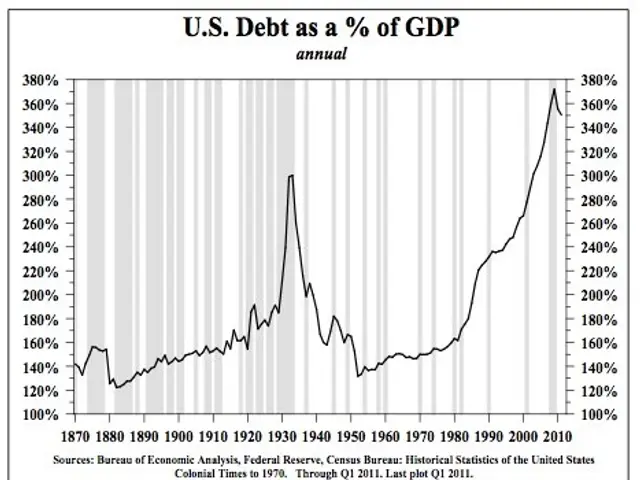
The US economy, often seen as the flagship of the consumptive West, is facing a recessionary environment through 2025–2026, with declines in consumer spending, government expenditure, business investment, and trade. Real GDP contracts, and unemployment rises, reflecting the adverse effects of economic imbalances and fiscal austerity, which together suppress growth and productivity. High debt levels and restrained public investment further hamper the ability to sustain economic expansion and innovation, contributing to long-term decline.
Europe's highly open economy depends heavily on imports for critical raw materials and digital technologies, exposing it to global supply shocks and geopolitical risks. High energy prices in the EU (2–3 times higher than in the US or China) further increase production costs. As a result, excessive consumption of imported goods without a robust domestic production base creates vulnerabilities and trade deficits that undermine long-term economic stability.
Modern economies’ dependence on complex, globalized supply chains means disruption in production inputs due to geopolitical tensions or war can have cascading effects, causing severe shortages and production halts. This exacerbates economic decline by weakening industrial output and increasing inflationary pressures. In addition, hyperinflation and currency devaluation, historically linked to excessive government spending post-crisis, destabilize economies, eroding savings and confidence as seen in past European crises.
Political and institutional factors also play a role in this economic decline. A disconnect between Western political elites and broader society has led to governance issues, with leadership often lacking effectiveness or innovation orientation. This political stagnation coincides with economic policies focused excessively on consumption and austerity rather than structural reform and productive investment, deepening economic malaise and decline.
To escape the consumption trap, Western countries would need to implement tough reforms, such as eliminating economically ineffective spending, imposing import tariffs and subsidies for domestic production, and enforcing strict budgetary discipline. However, any attempt at reform would be met with resistance from public bureaucracy, powerful business lobbies, corporate-owned media, ideological activists, and potential accusations of thought crimes or sexual harassment.
In conclusion, excessive consumption without corresponding increases in production capacity and innovation leads to trade imbalances, weakened productivity, and increased vulnerability to external shocks. Coupled with restrictive fiscal policies and political inertia, these factors collectively contribute to the economic decline of Western countries, especially within the EU, US, and Germany. This undermines their global competitiveness and economic resilience in a rapidly changing geopolitical and technological landscape.
- The erosion of productivity and innovation in the EU, particularly in Southern Europe, is partially due to longstanding policy failures that have reduced investment, echoing concerns over the lack of production capacity and technological advancement.
- Germany's reliance on legacy export markets and established industries, as a result of its strict fiscal discipline, may limit its competitiveness in emerging sectors like photovoltaics, demonstrating the importance of fostering disruptive innovation for future economic growth.
- The US economy's focus on excessive consumption and austerity, rather than structural reform and productive investment, mirrors the EU's challenges and may contribute to the economic decline predicted for the 2025–2026 period.
- Western countries' economic decline can be exacerbated by various factors, including the resistance to reforms from public bureaucracy, powerful business lobbies, and ideological activists, which may obstruct necessary changes in civil liberties, finance, and business policies for a more balanced focus on production and innovation.