
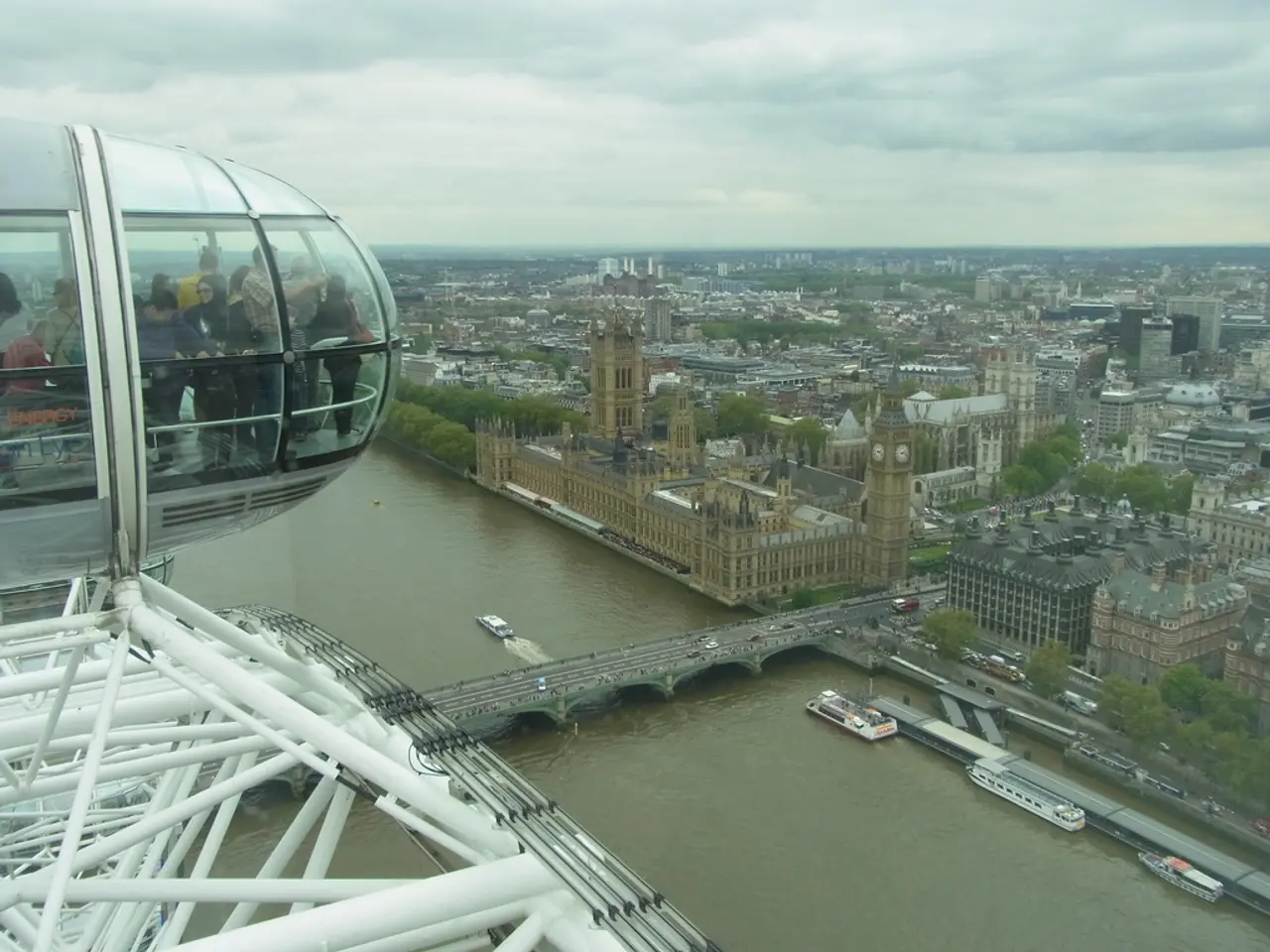
UK-India Free Trade Agreement (FTA) talks have come to a close; Prime Minister Modi's arrival is imminent, according to Vikram Doraiswami.
Prime Minister Narendra Modi is set to embark on a two-day visit to Britain from July 23 to 24, marking his fourth visit to the UK. This visit comes at a significant time, as the India-UK Free Trade Agreement (FTA), signed in July 2025, is poised to greatly enhance bilateral trade and economic ties post-Brexit.
During his visit, PM Modi will also engage in discussions about trade and investment with UK Prime Minister Keir Starmer. This FTA, which is expected to double trade between the two countries to $120 billion by 2030, is a comprehensive deal that aims to open major opportunities for trade expansion in key industrial sectors.
The India-UK FTA offers substantial tariff reductions across various sectors. For instance, India will reduce its average tariffs on UK goods from 15% to 3%, with tariffs on UK whisky dropping dramatically from 150% to 75% immediately, then to 40% over the next decade. Aerospace tariffs will be completely eliminated, and automotive tariffs will fall from as high as 110% to 10% under a quota system. Tariffs on electrical machinery will either be halved or removed, benefiting UK exporters in these industries.
The agreement benefits several sectors, including UK exporters of consumer products such as cars, cosmetics, soft drinks, medical devices, aerospace, automotive, electrical machinery, and whisky. For Wales specifically, key sectors include food and drinks and advanced manufacturing. The agreement also includes chapters on sustainable trade, environment, and gender, with India agreeing to provisions that are more comprehensive than before.
The India-UK FTA is projected to have a positive economic impact. UK exports to India are expected to increase by nearly 60%, adding approximately £15.7 billion (US$21.3 billion) by 2040. Bilateral trade is expected to grow by 39%, or about £25.5 billion (US$34.5 billion) annually over projected figures without the deal. The UK's GDP could increase by 0.13%, equivalent to £4.8 billion per year, while India's GDP may rise by 0.06%, or £5.1 billion annually in the long term.
Following the successful conclusion of the FTA on May 6, some last-minute paperwork, known as 'legal scrubbing,' is left to be finalised for the pact. This visit to Britain is not only a testament to the strong bilateral relations between the two countries but also a significant step towards further strengthening their economic relationship.
After his visit to Britain, PM Modi will undertake a state visit to Maldives from July 25-26, marking his third visit to the Maldives.
References:
- India-UK Free Trade Agreement: What it means for Britain
- India-UK Free Trade Agreement: What it means for India
- India-UK Free Trade Agreement: What it means for Wales
During the discussion with UK Prime Minister Keir Starmer, PM Modi might also touch upon the business and finance aspects of the India-UK Free Trade Agreement (FTA), as it offers significant opportunities for trade expansion across various industrial sectors. Furthermore, the agreement, particularly in its chapters on sustainable trade, environment, and gender, indicates a convergence of interests between the two nations in the broader context of general-news topics such as politics and international trade.

%20talks%20have%20come%20to%20a%20close%3B%20Prime%20Minister%20Modi's%20arrival%20is%20imminent%2C%20according%20to%20Vikram%20Doraiswami.)