Bavarian Transport Minister advocates for substantial, future-focused financing in infrastructure development - Transport Minister of Bavaria advocates for significant funding for long-term infrastructure development
## Bavaria Unveils Ambitious Infrastructure Investment Plans
Bavaria, a leading German state known for its rich history and vibrant economy, is embarking on a series of large-scale, long-term infrastructure projects. The focus of these investments is on roads, railways, and waterways, with the aim of enhancing both economic competitiveness and strategic resilience.
### Key Focus Areas
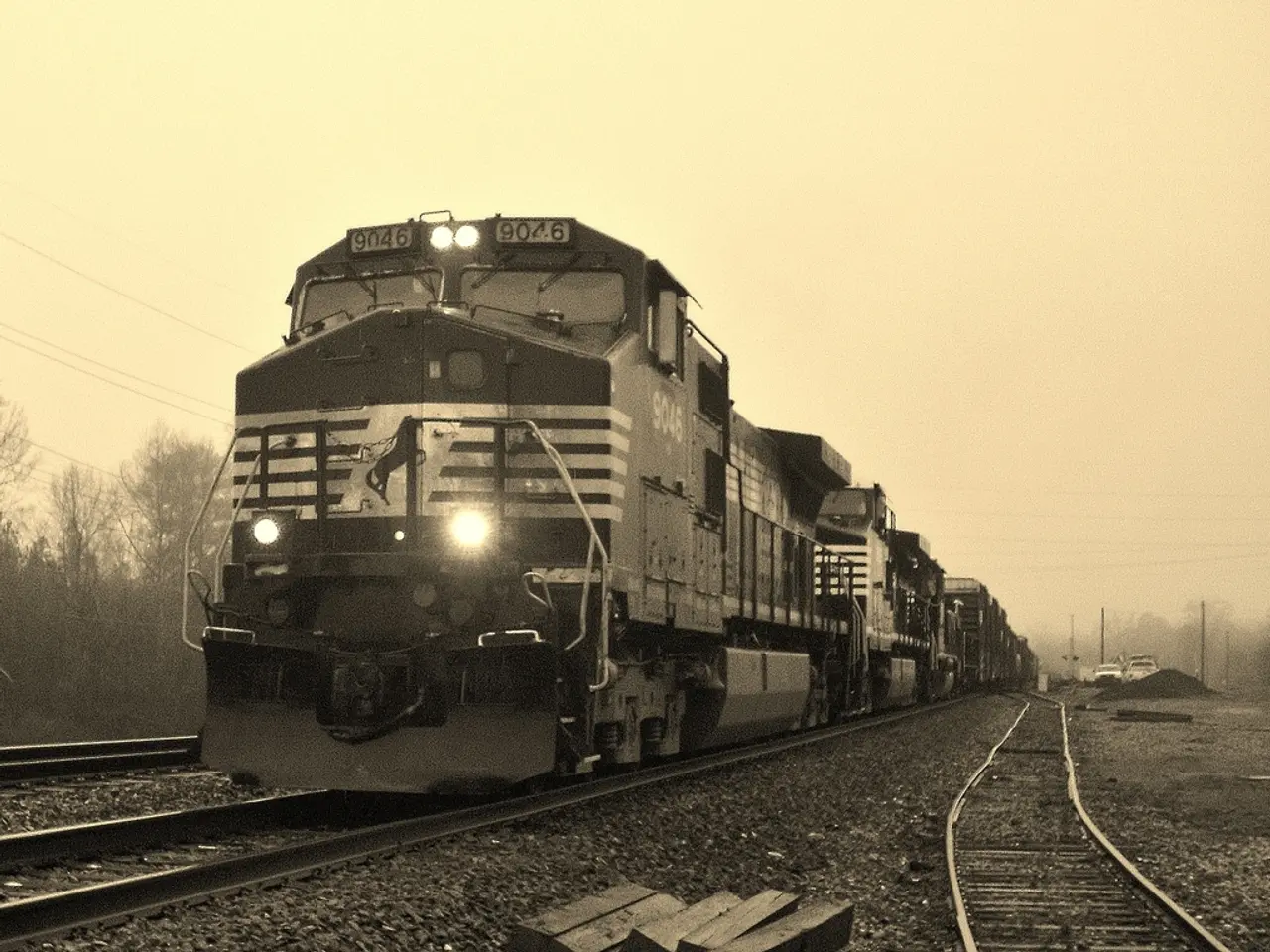
One of the main projects is the upgrade of the southern German logistics corridor connecting Augsburg, Ingolstadt, and Regensburg. This corridor will see improvements in railway infrastructure, such as lowering track arches for heavy transport, the expansion of the B 16 road to separate and secure military and civilian traffic, and the construction of heavy-duty handling ramps on the Danube for multimodal logistics. The B 16 expansion alone is considered urgent and involves an investment of over €800 million.
In addition, HOCHTIEF, a leading construction company, has won a €170 million contract to build or convert ten level crossings and twelve train stations in Bavaria, reflecting ongoing investments in rail modernization and connectivity.
Bavaria is also actively involved in the national hydrogen core network expansion, with calls for clear regulatory frameworks to enable timely private investment in hydrogen storage and transport infrastructure.
The state is also vying to host one of the EU’s planned AI gigafactories, which would be major data centers equipped with advanced AI chips. The EU is prepared to provide up to €20 billion in funding, with private co-financing expected.
### Funding Sources
Major road and rail projects, such as the B 16 expansion and the Augsburg–Ingolstadt–Regensburg corridor, are primarily funded through public budgets, including federal transport investment plans (BVWP 2030). The EU may also contribute to cross-border and strategic projects.
The proposed AI gigafactories would be financed through a new EU fund, with Bavaria eligible to compete for a share of up to €20 billion, supplemented by private sector investment.
Public-private partnerships (PPPs) are being considered for logistics hubs along the B 16, offering reserve land and modular facilities to attract long-term business investment. Hydrogen infrastructure expansion also relies on creating conditions for private investment.
Large energy and rail projects are often awarded to private companies via competitive tender, with firms like HOCHTIEF and SPIE executing multi-million-euro contracts funded by both public and private entities.
### Summary Table: Major Infrastructure Initiatives and Funding
| **Focus Area** | **Key Projects** | **Funding Sources** | **Timeline** | |------------------------------|-------------------------------------------------------------|-----------------------------------------|-----------------------| | Transport/Logistics | B 16 expansion, rail upgrades, Danube ramps | Federal/state budgets, PPPs | Ongoing to 2030+ | | Rail Infrastructure | Station conversions, level crossings | Public contracts (HOCHTIEF) | 2025 onward | | Energy Grid | Jura line renewal, substation upgrades | Public/private contracts (SPIE, TenneT) | 2025–2030 | | Hydrogen | Core network expansion, storage | Public framework, private investment | Planning phase | | Digital/AI | EU AI gigafactories (applied for) | EU grants, private co-financing | Selection 2025, ops 2028|
### Outlook
Bavaria’s long-term infrastructure strategy emphasizes multimodal transport, energy transition, digital sovereignty, and hydrogen readiness. Funding is a mix of substantial public investment, EU grants (especially for digital projects), and targeted private participation, particularly in logistics and energy. Clear regulatory frameworks are seen as essential to unlock further private capital, especially in emerging sectors like hydrogen and AI infrastructure.
The Bavarian Transport Minister, Andreas Scheuer, has emphasized the need for long-term infrastructure upgrades, referring to them as a "great shared task." The Conference of Transport Ministers, of which Scheuer is the chairman, will discuss the proposed infrastructure upgrades. Scheuer has previously stated that upgrading infrastructure is crucial for the future of transportation.
- Bavaria's ongoing infrastructure investment in the southern German logistics corridor includes not only the upgrade of railway infrastructure and expansion of the B 16 road, but also the construction of heavy-duty handling ramps on the Danube for multimodal logistics, which aligns with their focus on vocational training and improving industry.
- In addition to the involvement in the national hydrogen core network expansion, Bavaria is actively seeking to host one of the EU’s planned AI gigafactories, demonstrating a commitment to finance and business-driven projects, such as industry, finance, and transportation.