Strike at Bangladesh's major port comes to an end, allowing operations to recommence.
Port Chaos in Bangladesh: Worker Strike at the National Board of Revenue
Bangladesh's busiest port, Chittagong, started operating again on June 30, following a two-day work disruption by customs officials. Sehela Siddiqa, Joint Tax Commissioner and secretary of the NBR Reform Unity Council, confirmed the ports' return to normal activities.
"The ports are back in business across the nation," Siddiqa told AFP. "All employees are back at their posts."
Employees at the National Board of Revenue (NBR), responsible for tax collection, have been protesting for over a month against the interim government's planned reform of the agency. The government's proposal includes abolishing the NBR and splitting it into two separate entities to manage tax policy formulation and collection.
Over the weekend, some NBR staff launched a "complete shutdown", affecting various departments, including customs. The workers resumed duties after the government threatened severe consequences. The standoff ended late Sunday night following intense negotiations between NBR staff and the Ministry of Finance, facilitated by business groups.
Senior NBR official Hasan Muhammad Tarek Rikabdar stated that the strike was lifted after optimistic commitments from the government.
"We applaud the government’s decision to establish an advisory committee for revamping revenue management, and we look forward to actively participating in the process," Rikabdar told reporters on Sunday night.
Concurrently, the Anti-Corruption Commission (ACC) initiated an investigation against six NBR officials, including Rikabdar, for suspected corruption. They were accused of facilitating tax evaders in exchange for bribes.
"Allegations against the six officials have been confirmed, leading to the investigation," ACC Director General Md Akhter Hossain said.
The port strikes, primarily at Chittagong and Mongla, were primarily led by the NBR's staff, chiefly customs officials. The demonstration was a response to the government’s proposed reform plan to restructure the tax authority, which the striking workers feared would result in job losses and instability of the institution. Fearing threats to their employment security and the institution's stability, the NBR staff resisted these changes.
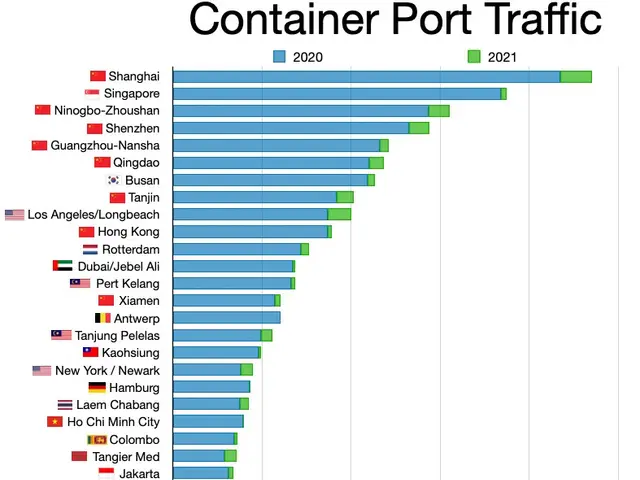
The disrupted port operations brought a grinding halt to Bangladesh’s maritime trade, essential for its economy. The Chittagong port handles about 90% of the nation's maritime trade and moves approximately 7,000 to 8,000 containers daily. The halt resulted in significant economic damage, particularly for the garment sector,which represents 80% of the country's exports, facing potential losses of $222 million per day during the stoppage. This incident underscores the fragility of Bangladesh's export-oriented economy, heavily dependent on efficient port operations.
- Despite the resumption of operations at Chittagong port, the ongoing strike by employees at the National Board of Revenue (NBR) continues to cause disruptions in the finance and business sectors, especially in the garment industry which accounts for 80% of Bangladesh's exports.
- Amidst the top stories of the day, the investigation launched by the Anti-Corruption Commission (ACC) against six NBR officials, including Rikabdar, adds a layer of complexity to the ongoing political-business tension, with implications for general-news and politics as well.