Selecting Appropriate Merchandise for Diverse Marketing Goals
In today's competitive business landscape, choosing the right promotional product supplier is crucial for achieving specific marketing objectives. These suppliers offer valuable advice on which products work best for each marketing goal.
Partnering with experienced service providers like [CustomGear.com.au](http://CustomGear.com.au) ensures access to high-quality, custom-branded items that truly represent a brand. Such items, ranging from premium tech accessories to quality apparel, can create a lasting connection with customers, encouraging their continued association with the brand.
When it comes to customer loyalty and retention, offering branded exclusives or limited editions can create a sense of exclusivity and appreciation, fostering customer loyalty and repeat engagement. Well-made promotional products become long-term assets, enhancing the visibility of your brand and leaving a lasting impact on consumers.
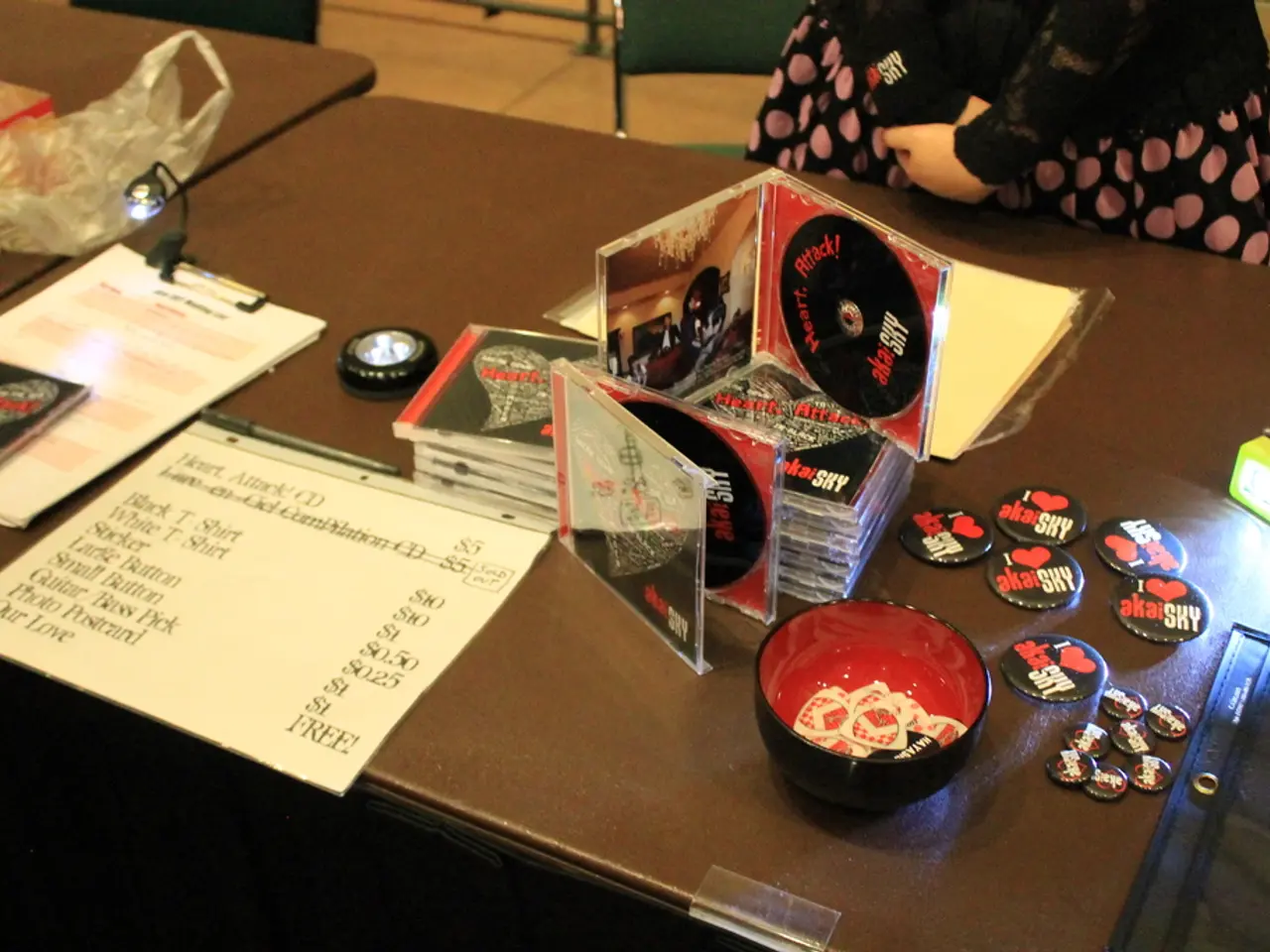
For event marketing, promotional merchandise can serve as both functional gifts and powerful marketing tools. During events, these items engage participants and leave a lasting connection long after the event is over. If the goal is to raise brand awareness, choose items with broad appeal and high utility, such as T-shirts, tote bags, or mugs.
If a company aims to promote a specific product or service, aligning merchandise with that offering is essential. For instance, eco-friendly products like reusable water bottles, eco-friendly tote bags, or sustainable notebooks would be suitable for a company promoting environmentally-friendly offerings.
Defining clear, SMART marketing objectives is essential for choosing the right merchandise and maximizing its effectiveness. Understanding the target audience and their preferences is also crucial. Tailoring promotional products to the needs and preferences of key buyer personas increases emotional connection and marketing ROI.
Aligning promotional items with the buyer journey and messaging is also important. This ensures that promotional items complement marketing content across all stages of the buyer journey, supporting sales efforts and reinforcing brand messaging.
Integrating promotional merchandise into a cohesive marketing mix is another key strategy. This ensures all messaging and branding are consistent and reinforce each other, delivering a single, memorable brand experience.
Leveraging data and intent signals for targeting is also important. Distributing promotional merchandise strategically to prospects most likely to engage or convert improves effectiveness and ROI.
Finally, regularly measuring and adjusting strategies based on key performance metrics such as brand awareness, engagement, lead generation, and sales impact linked to promotional campaigns is crucial for refining product selection, messaging, and targeting to better meet business goals over time.
In conclusion, the right promotional products can make all the difference in achieving success in marketing. By following these key steps, businesses can enhance their brand presence and drive tangible business outcomes effectively.
Businesses can strategically select promotional items that align with specific marketing goals, such as using eco-friendly products to promote environmentally-friendly offerings. To maximize the effectiveness of promotional merchandise, companies should integrate them into a cohesive marketing mix, tailor items to the needs and preferences of key buyer personas, and distribute them strategically to prospects most likely to engage or convert. In finance, the return on investment (ROI) from promotional campaigns can be improved by regularly measuring and adjusting strategies based on key performance metrics like brand awareness, engagement, lead generation, and sales impact.